
Photo: Lia Conklin, artist with “Resonance” at Toledo Museum of Art, Toledo, Ohio
The question that guides my work is not simply What do we see? but How should we look?
I believe the way we attend to the world shapes what we are able to understand. Looking carefully—to materials, places, histories, and one another—is a practice of curiosity and care. It asks us to remain with uncertainty, resist easy conclusions, and recognize that meaning often emerges through sustained observation.
I create site-responsive installations, photographs, prints, glass works, and paper-based investigations that explore how materials record time, labor, and environmental change. Rather than treating materials as passive supports, I approach them as active records that accumulate evidence through weathering, contact, and transformation. My work is interested in what remains—how places, objects, and surfaces hold traces of human activity long after events have passed.
Research, observation, and documentation provide a framework, but materials remain active collaborators in the work. Rather than illustrating predetermined ideas, I allow processes of transfer, repetition, weathering, and transformation to generate unexpected relationships. Many installations continue to change with light, movement, and duration, reminding us that there is rarely a single, fixed visual experience but instead a series of encounters that shift with perspective.
Whether working independently or in collaboration with communities, I am interested in creating spaces where careful observation becomes a shared practice. If art has the capacity to change us, perhaps it does so by changing the quality of our attention.
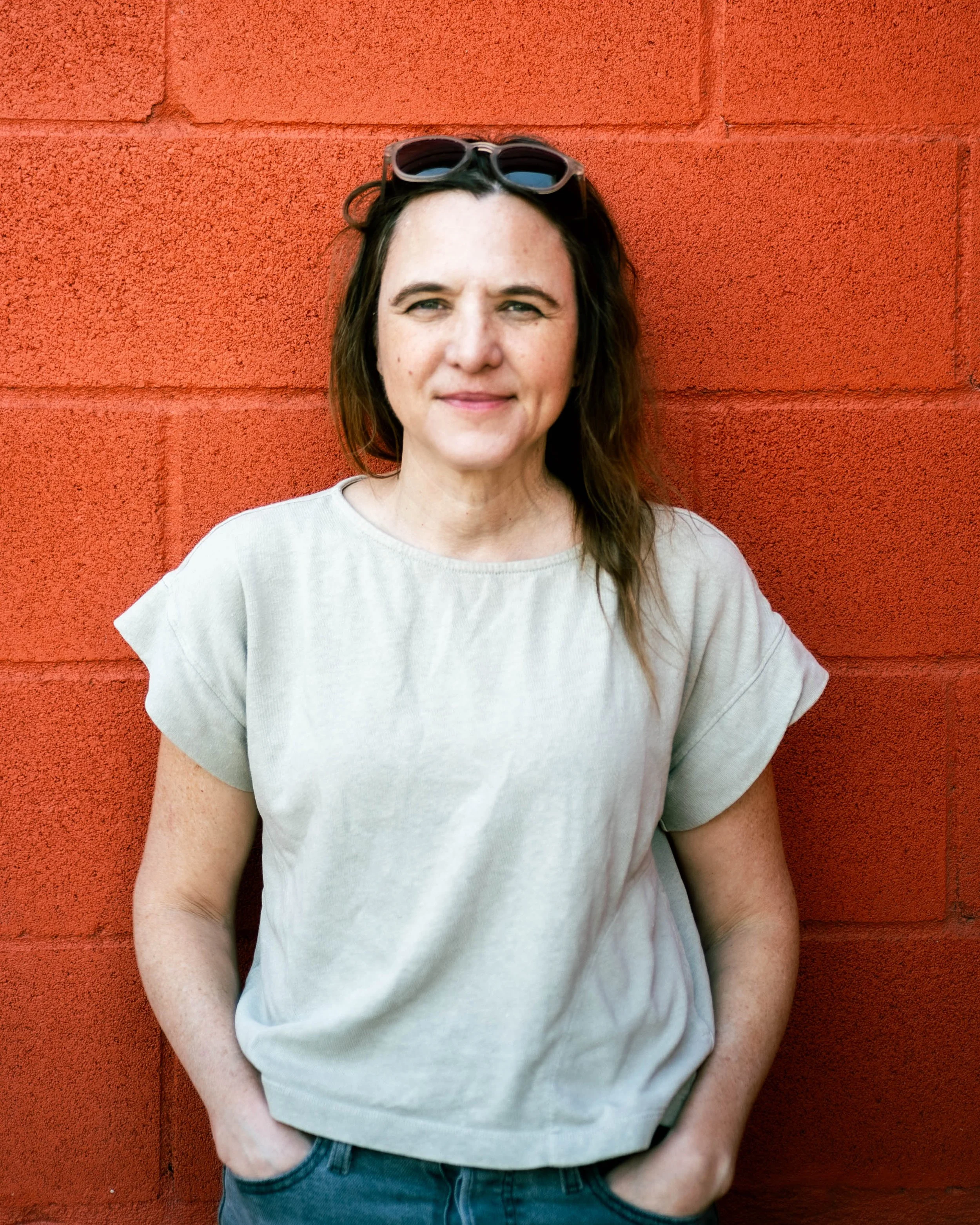
Photo: John Thompson
Carrie Iverson is an artist based in Dallas/Fort Worth, Texas.
Born and raised in rural Virginia, she received her BA from Yale University in 1994 and her MFA from the School of the Art Institute of Chicago in 1998. The complexities of her rural upbringing continue to influence her approach to making work; shifting back and forth between the academic world of her parents and the working-class community of her school shaped her ongoing interest in presenting multiple stories simultaneously.*
This focus has led to innovative approaches to creating work: staging a community iron pour outside a former factory, collaborating with the maintenance crew in a government building, and installing a memorial to the casualties of the Iraq War in the windows of an empty warehouse. Her experimental mindset also extends to materials, from pioneering ways of combining printmaking with glass to using paper pulp and enamel undercoating as materials in their own right. At their heart, all her projects are driven by interacting with a specific place, from wallpapering a worker’s flat on Chicago’s south side to creating an evolving archive at the de Young Museum in San Francisco.
Her work is in many collections including the Art Institute of Chicago, the Museum of Modern Art (New York), and the Museum of Contemporary Art (Chicago). Additionally, she has been an artist in residence at the de Young Museum (San Francisco), KALA Art Institute (Berkeley), North Lands Creative Glass (Scotland), Seto Center for Glass and Ceramics (Japan), Pilchuck Glass School, Alberta College of Art and Design (Canada), and Glenfiddich (Scotland).
*Farmville Virginia’s former Robert Russa Moton High School, now a National Historic Landmark and museum, is the birthplace of America’s student-led civil rights revolution. Read more on the Moton Museum website.
My research interests include site-responsive installation, material research, printmaking, glass, handmade paper, site observation, environmental processes, public art, community engagement, and material histories.