Static field
Pest pest @ the Boedeker
Cedars Union, Dallas Texas
April 2 - 22, 2026
Static Field was created for Pest Pest, a group exhibition by the artists of Easyside, a Fort Worth–based collective. Installed within the Boedeker’s industrial interior, the exhibition assembled site-responsive works that engage the dual meanings of pest—as both irritant and agent. Artists activated the building’s architecture and materials to trace how disturbances persist as residue: accumulating, dispersing, or remaining difficult to locate. Under the plague-era mark XX, Pest Pest framed contamination and dysfunction as ongoing, entangled conditions—systems that continue to operate even as they break down.
XX
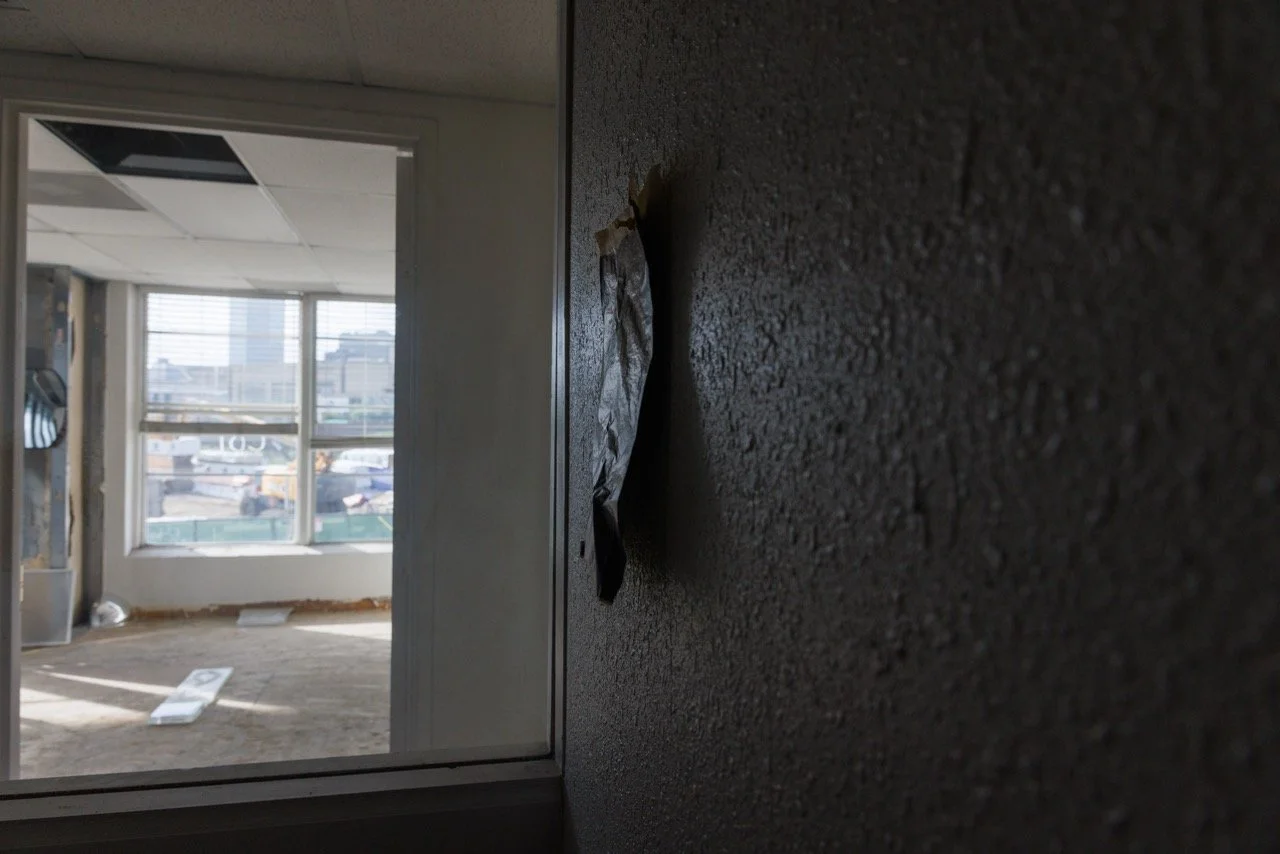
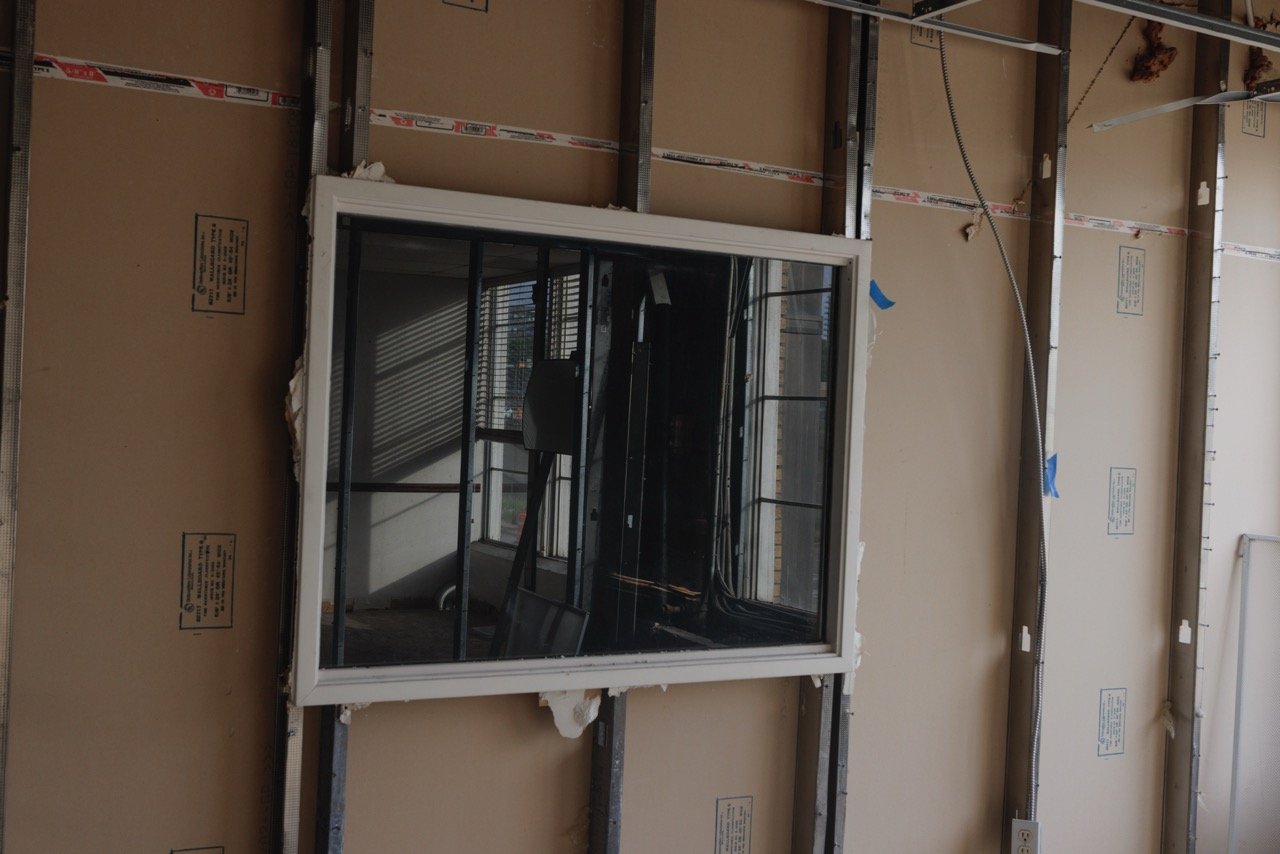
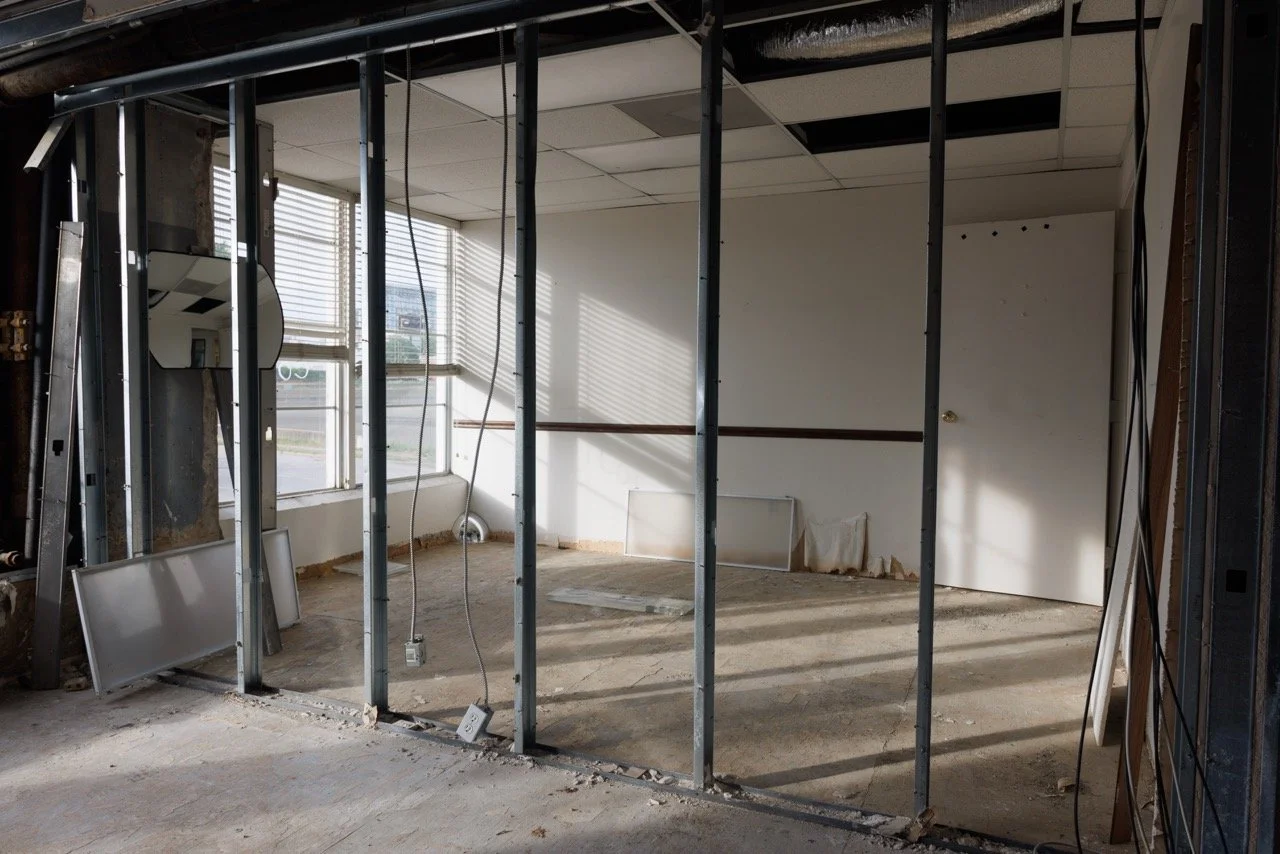
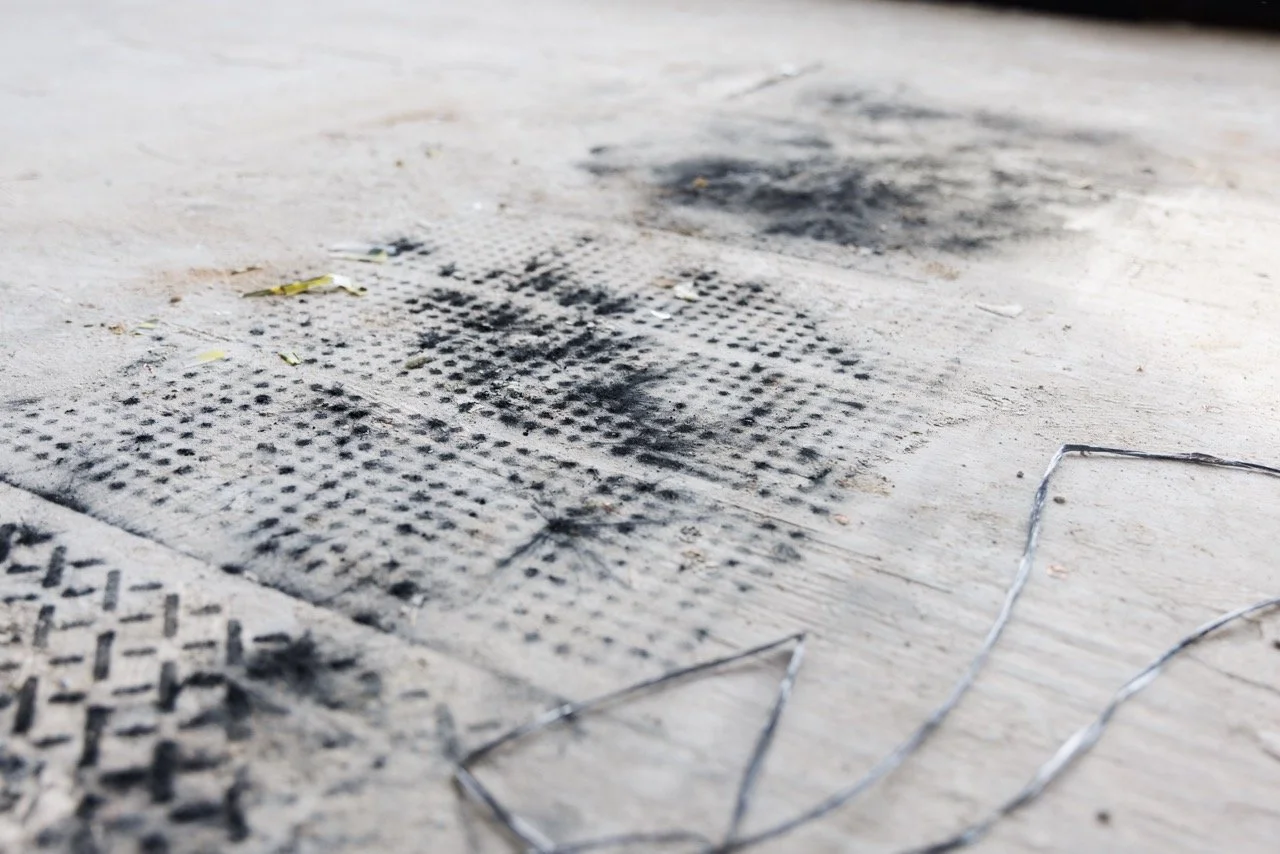
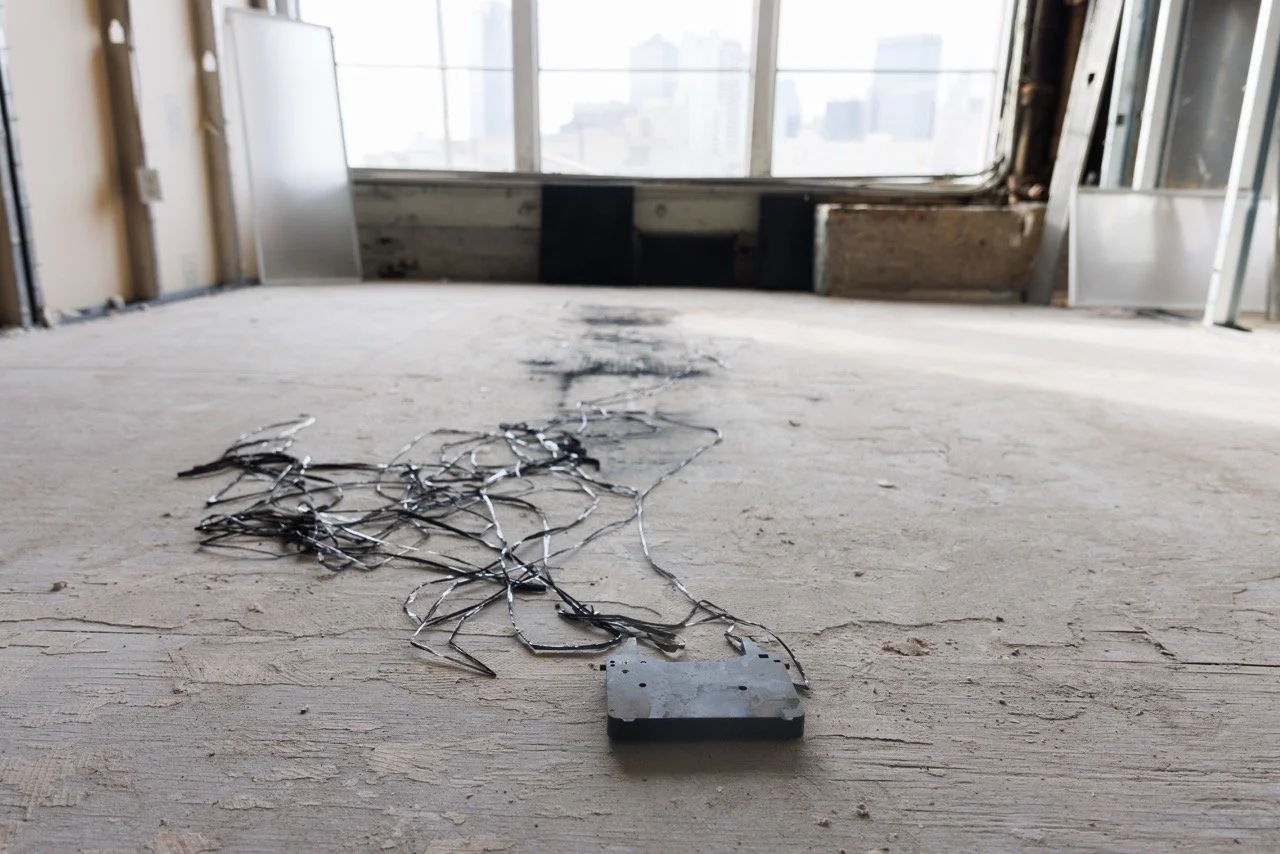
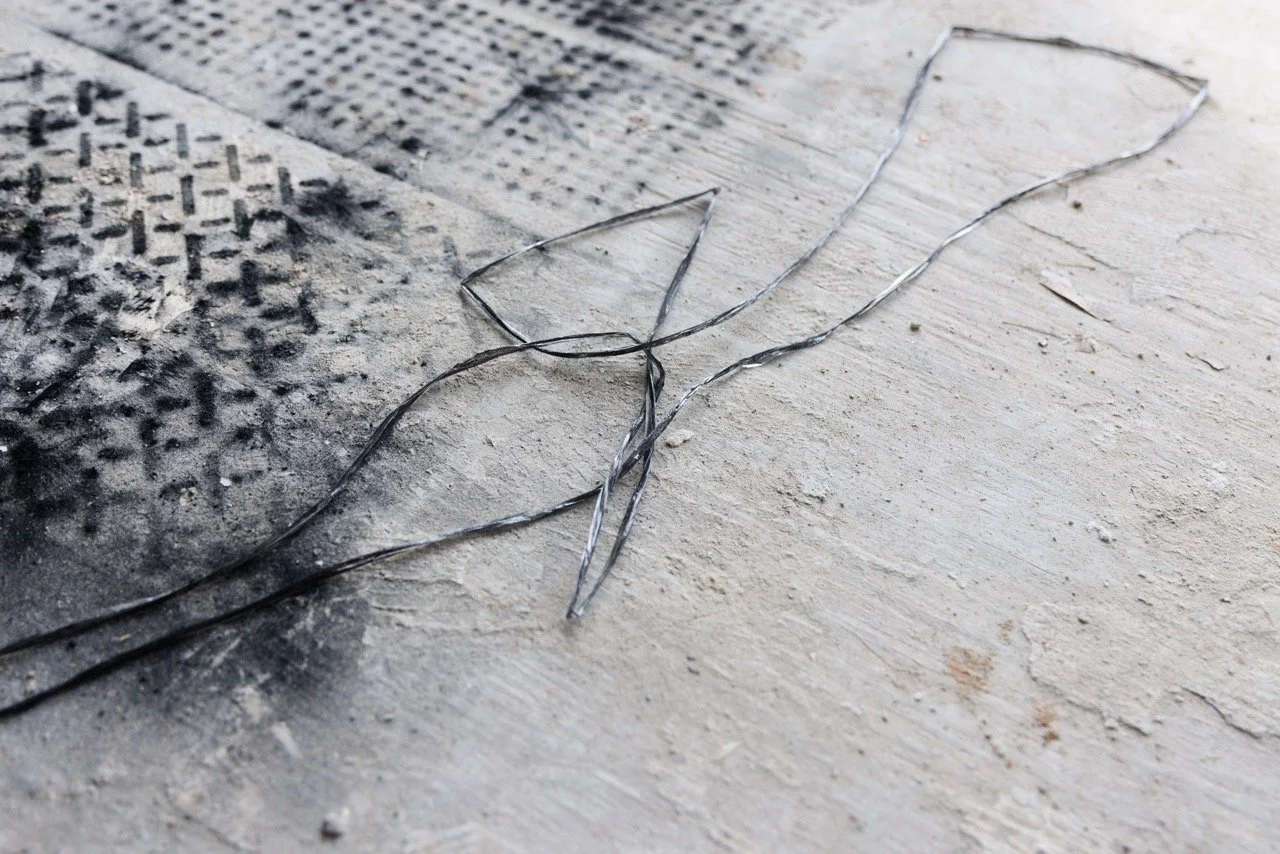
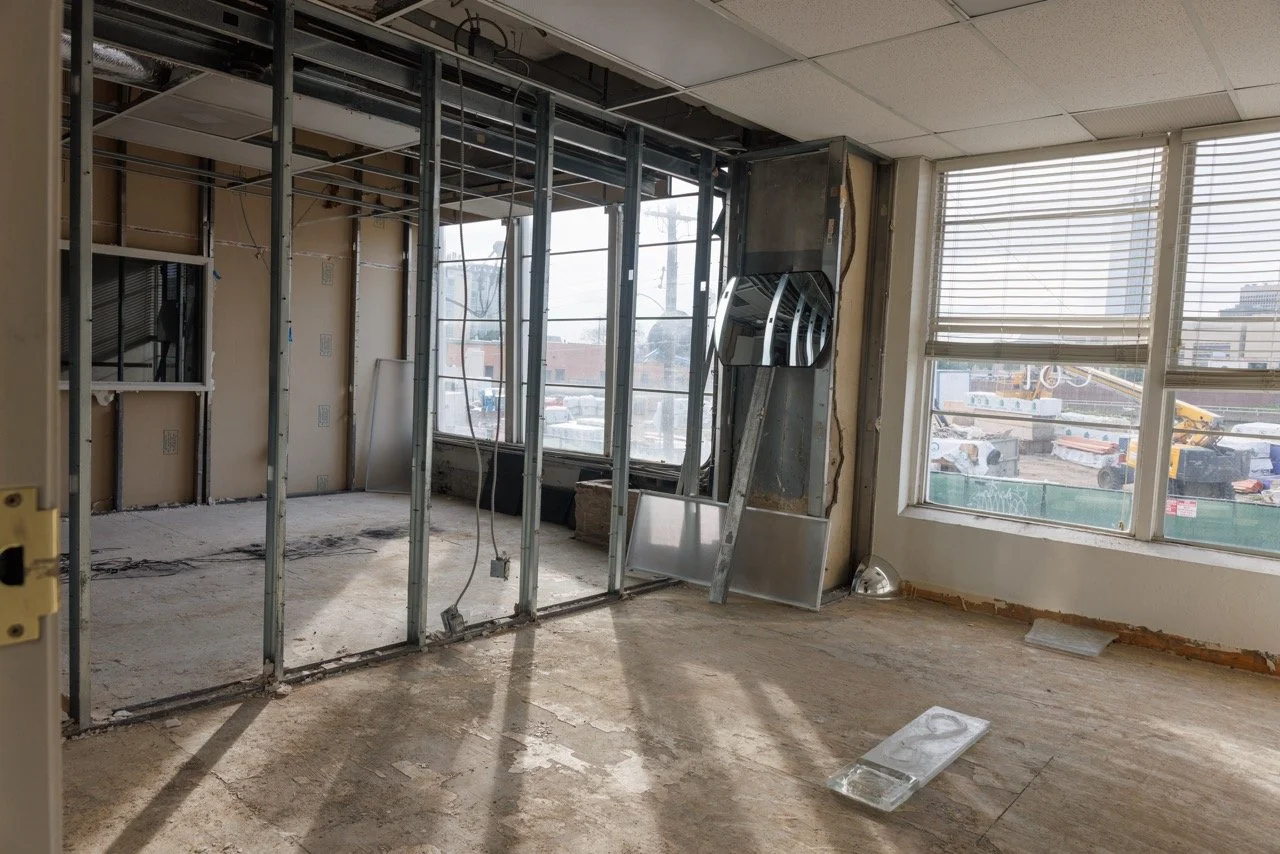
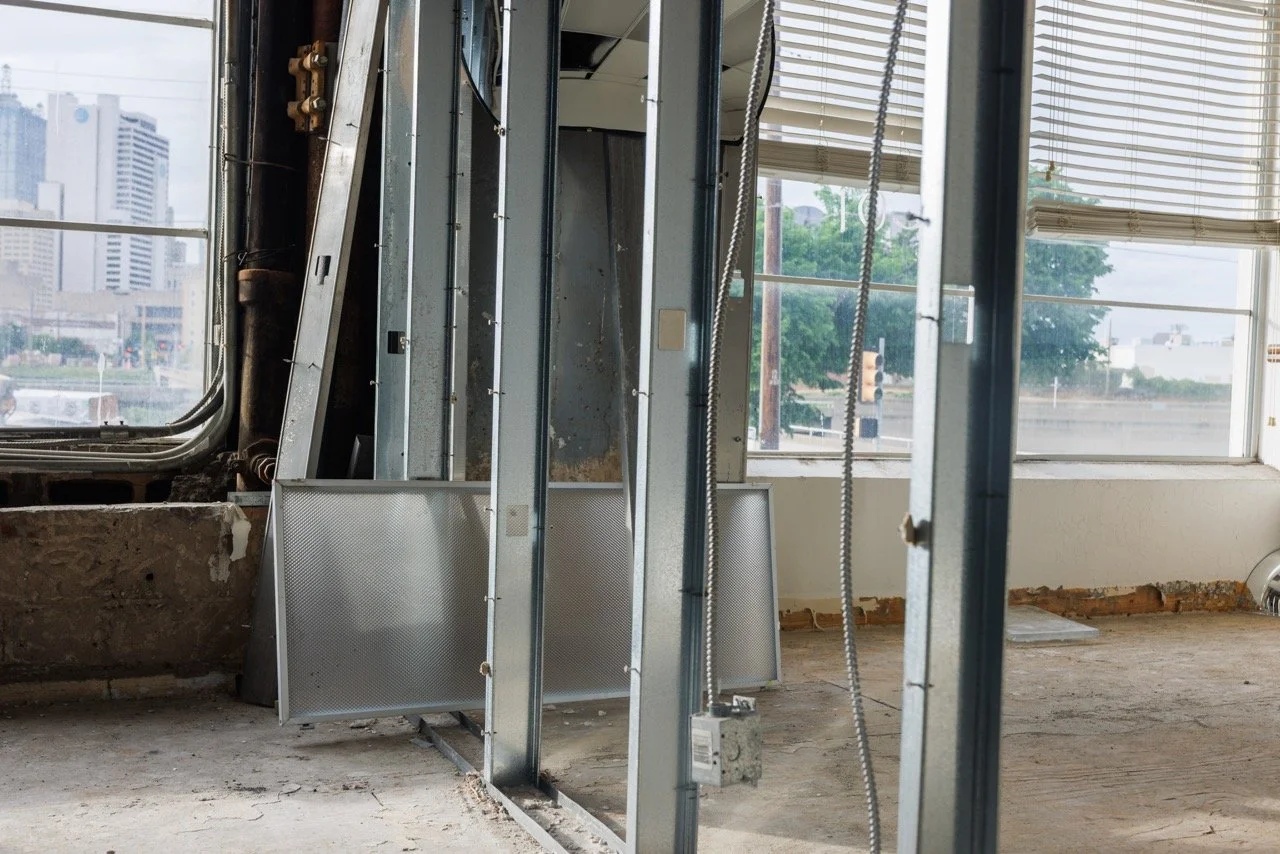
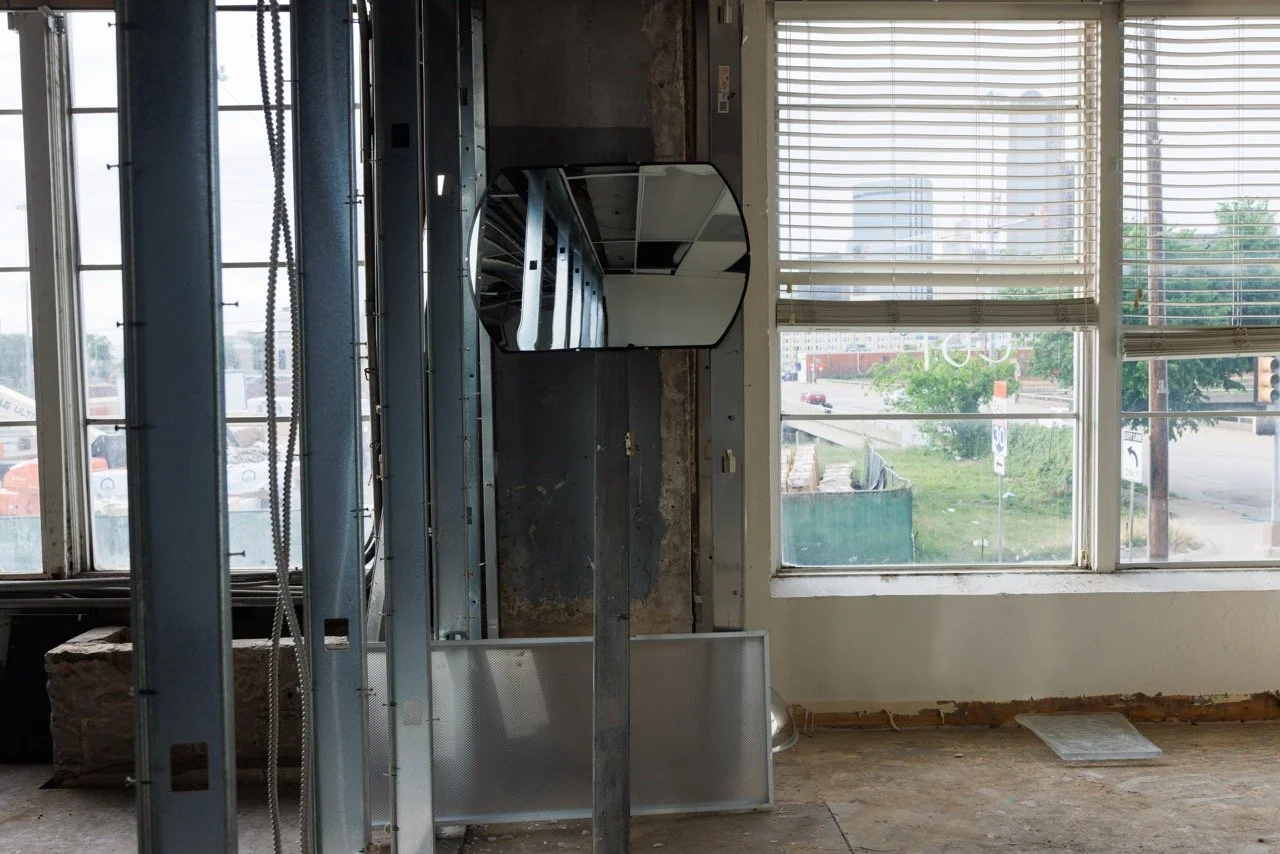
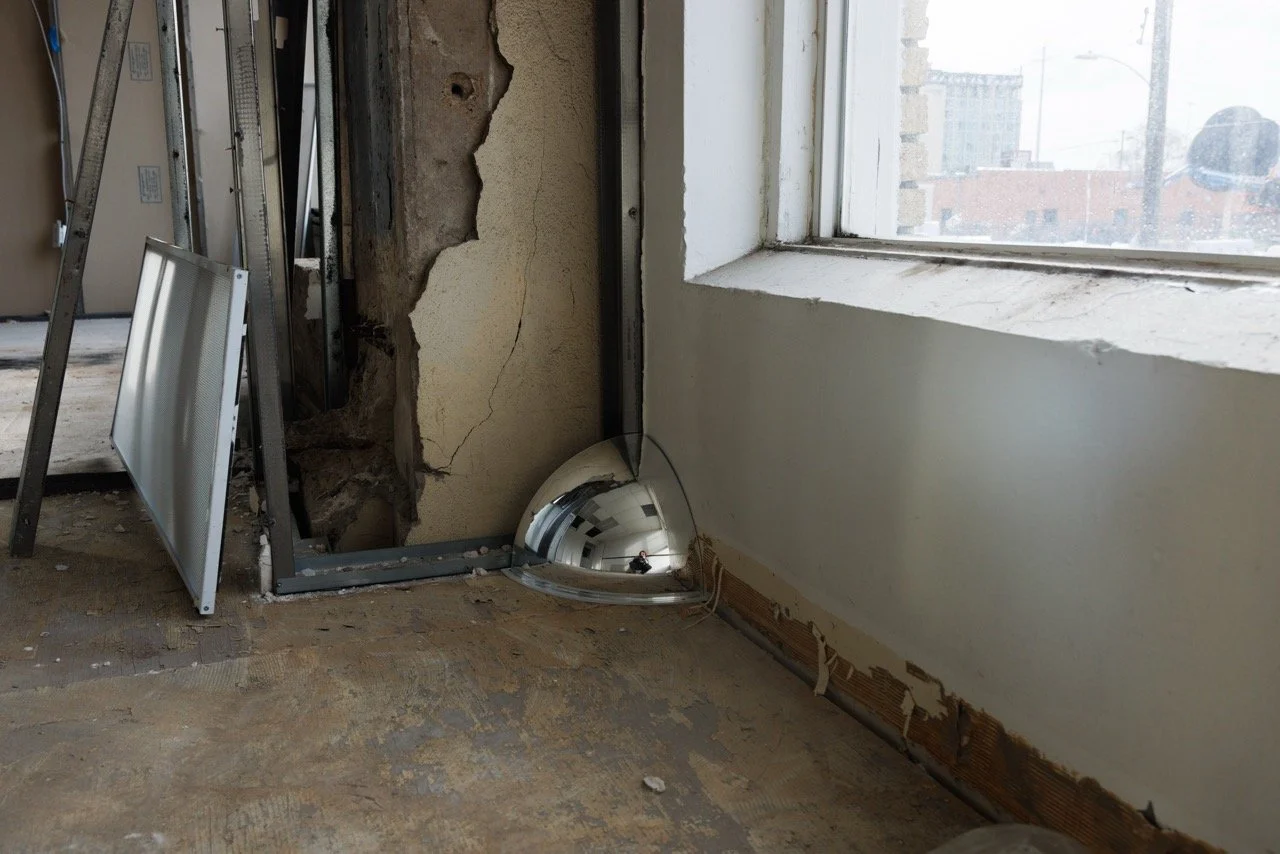
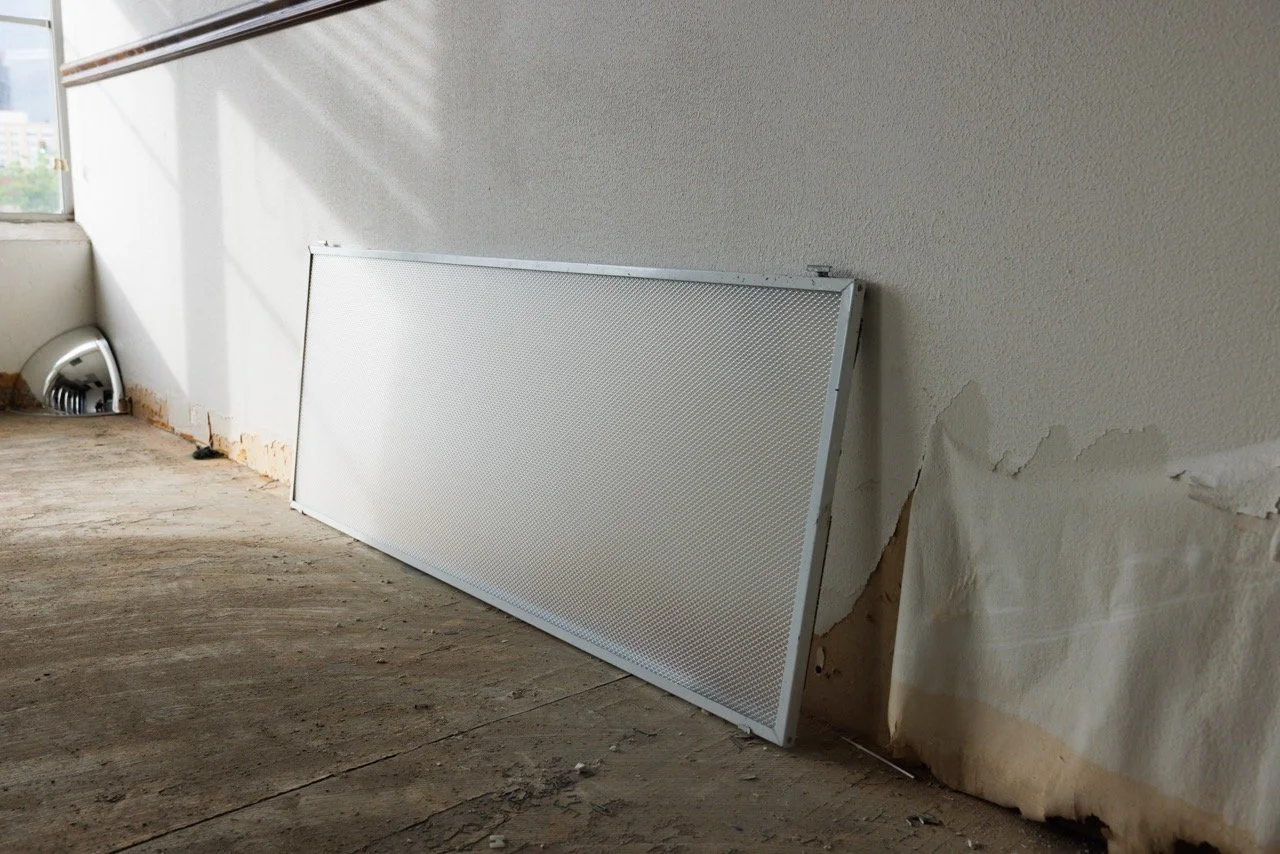
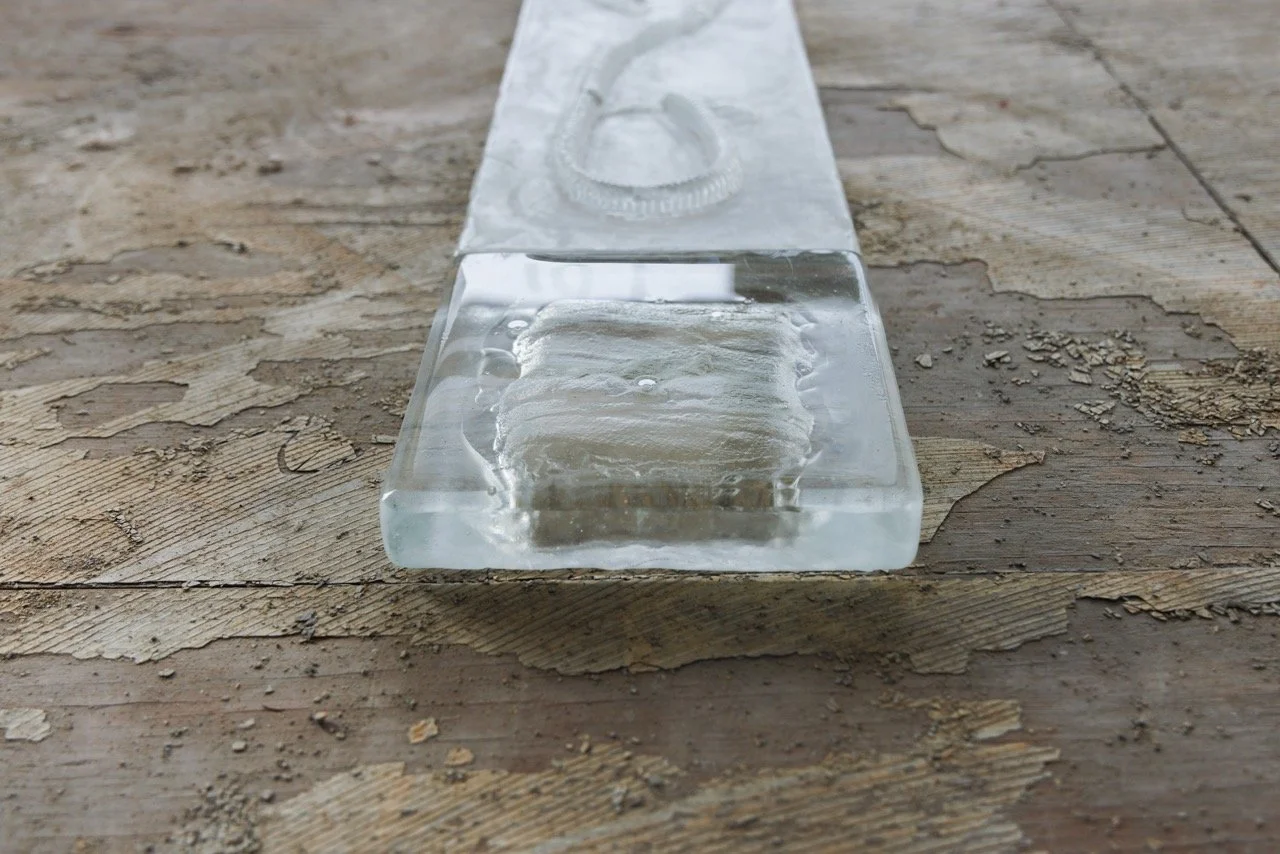
“In Static Field, transmissions are partial and declining—exposed systems persist but fail to maintain consistency. Cast glass elements resembling blocks of ice encase electrical conduits and bound cloth, holding flow in a suspended state. Across the floor, toner and typewriter ribbon disperse into a field of signals—marks that accumulate without resolving into legible communication. Light behaves unevenly, leaking and cycling out of sync, while a convex surveillance mirror gathers and returns the space as a warped, continuous image. Within the entropic environment of the Boedeker, the work frames breakdown as an active condition—operational, distributed, and difficult to locate.
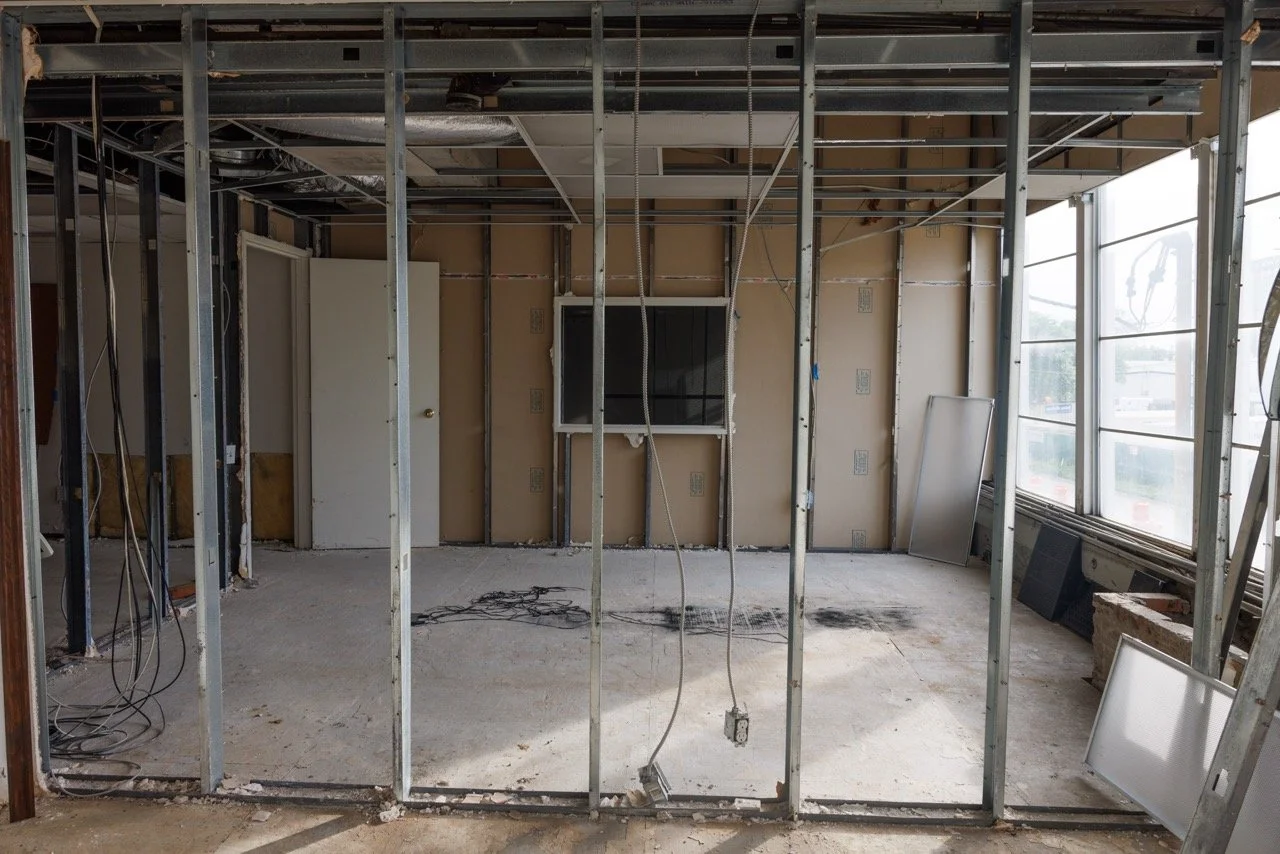
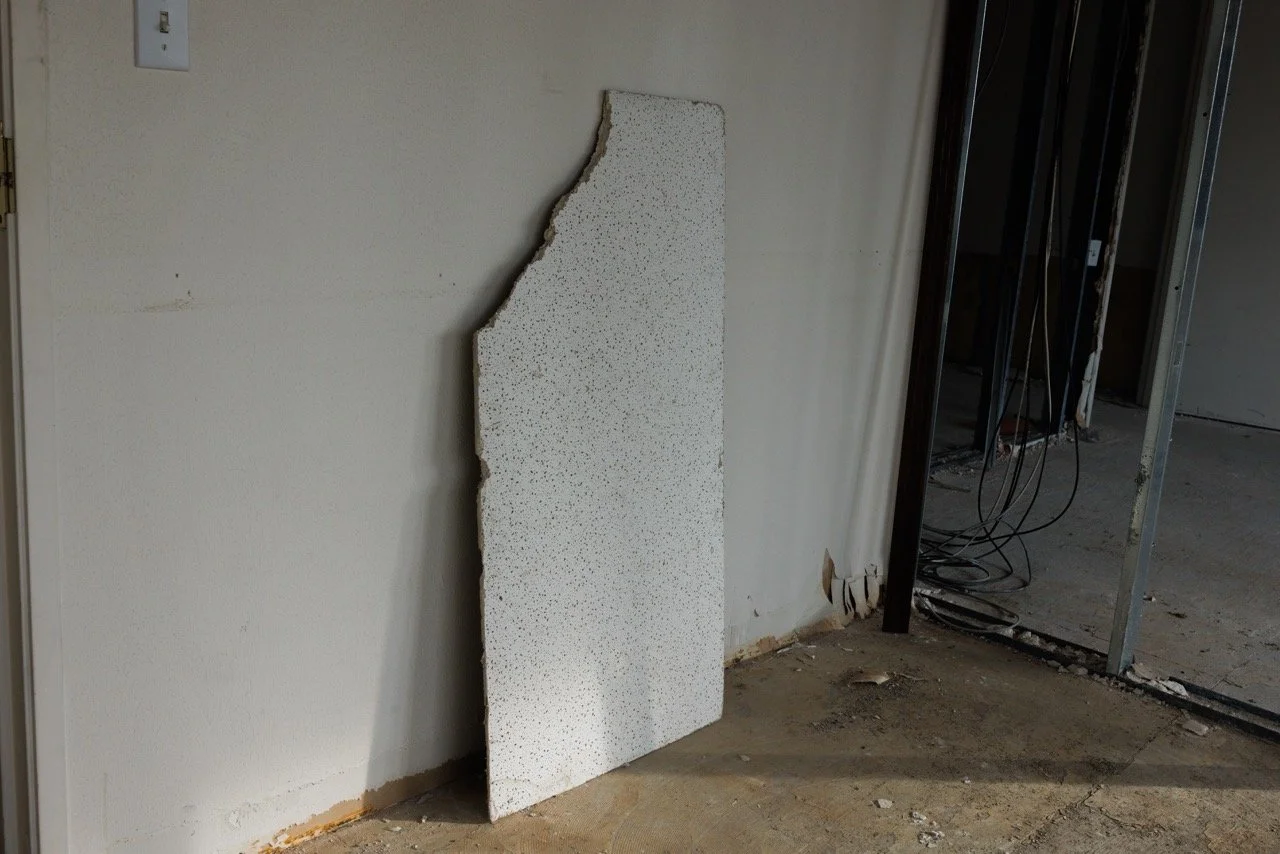
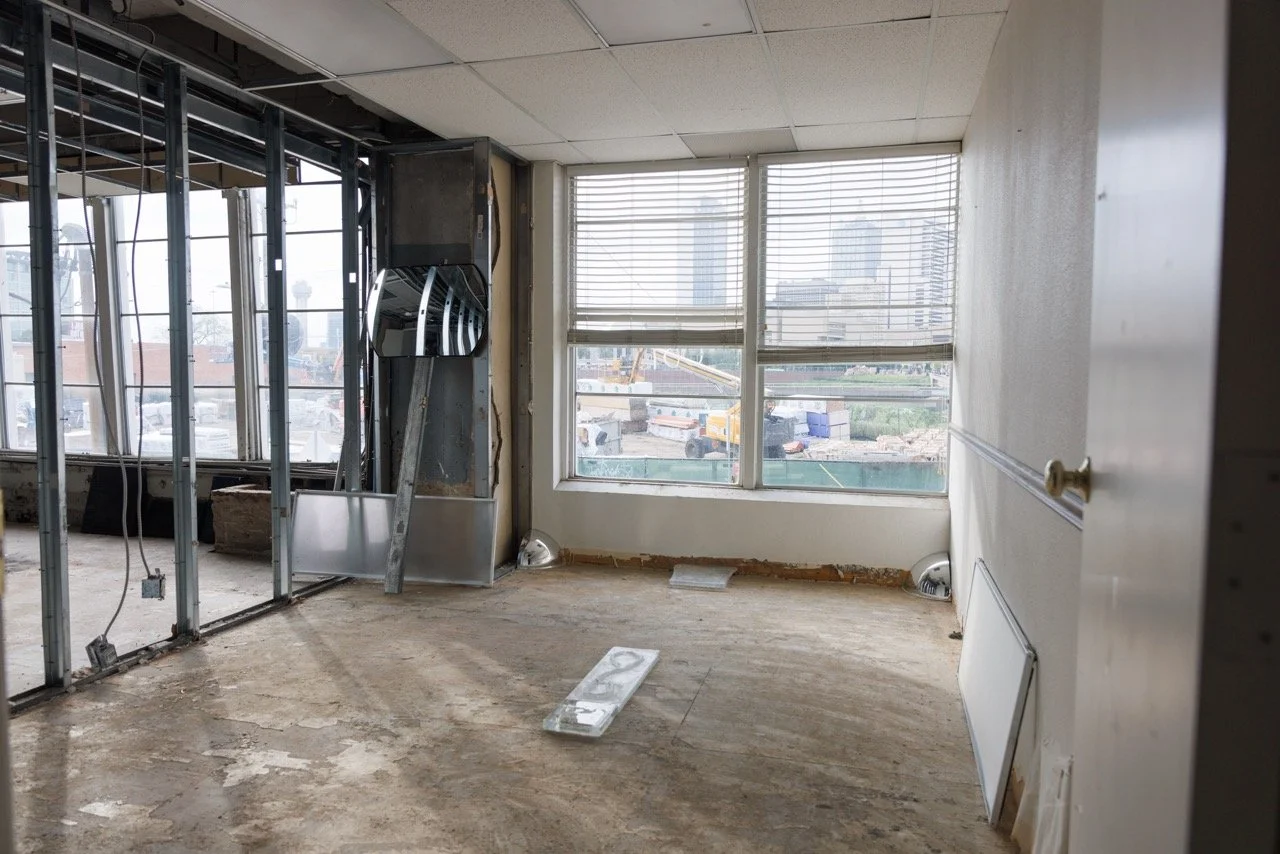
Many components were gathered directly from within the building—fluorescent light covers, metal studs, toner, and typewriter ribbon—compressing and reorganizing remnants from the space. As light moves through the parallel rooms, reflective and translucent surfaces shift in relation to one another, changing with conditions of light and shadow rather than stabilizing into a fixed image. The two states—finished and unfinished, frozen and scattered—rest alongside one another, separated by aluminum studs.
The Boedeker building was originally constructed as an ice cream factory, designed around systems of refrigeration, circulation, and controlled production. It was later repurposed for office-supply storage, maintaining its function as a site of containment and distribution. Now partially deconstructed, the building exposes its internal framework—metal studs, fluorescent fixtures, and electrical systems—revealing the infrastructure that once regulated temperature and flow.
INSTALLATION DETAILS
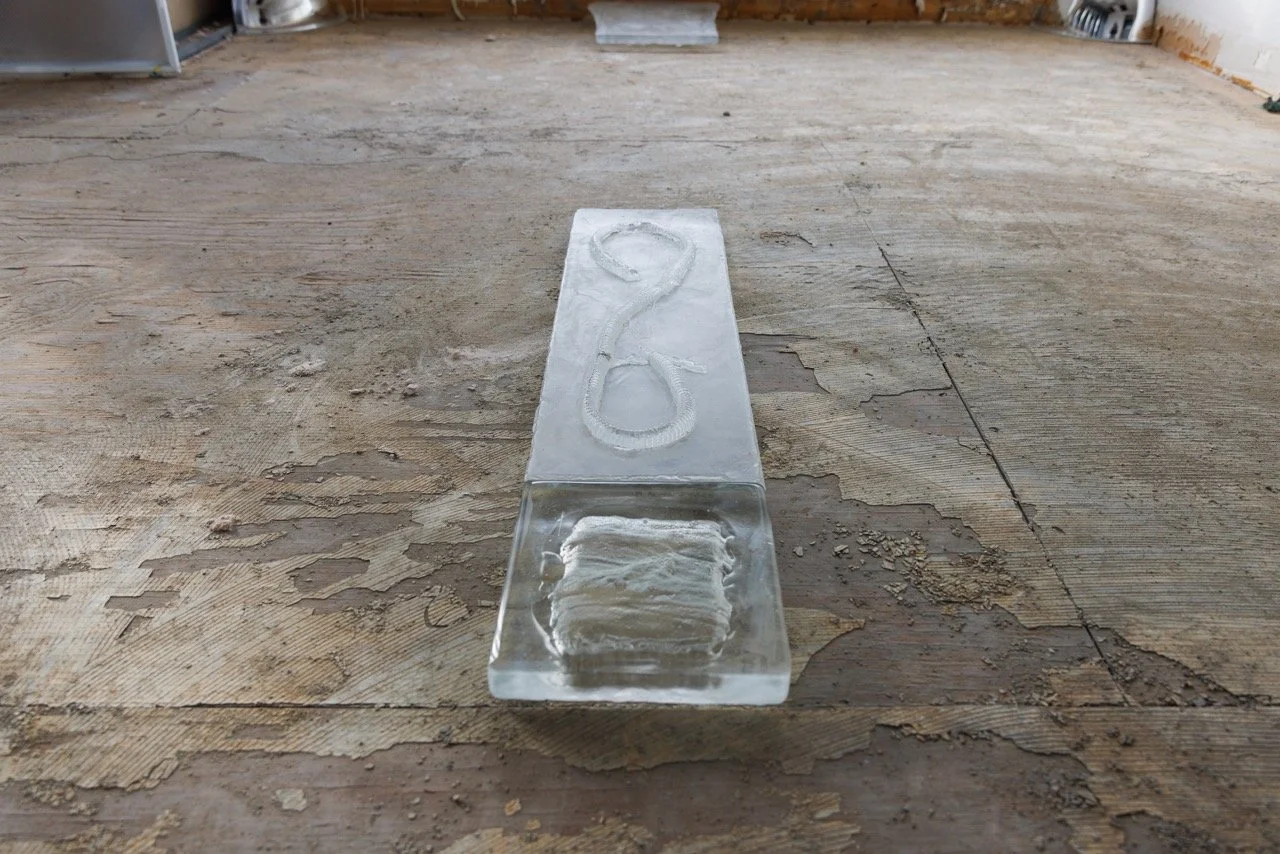
Detail of “Static Field” castings, photo by Evie Bishop
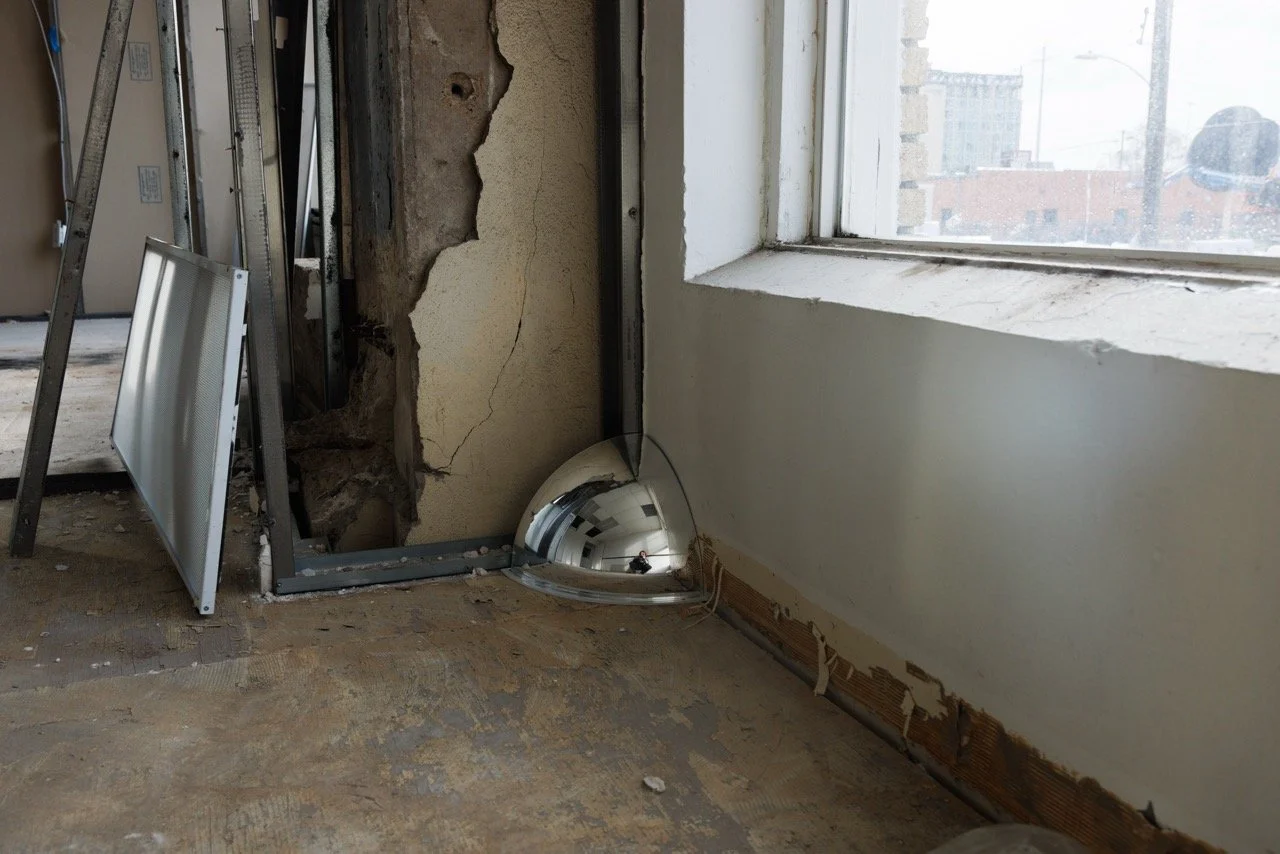
Detail of “Static Field” rearrangements, photo by Evie Bishop
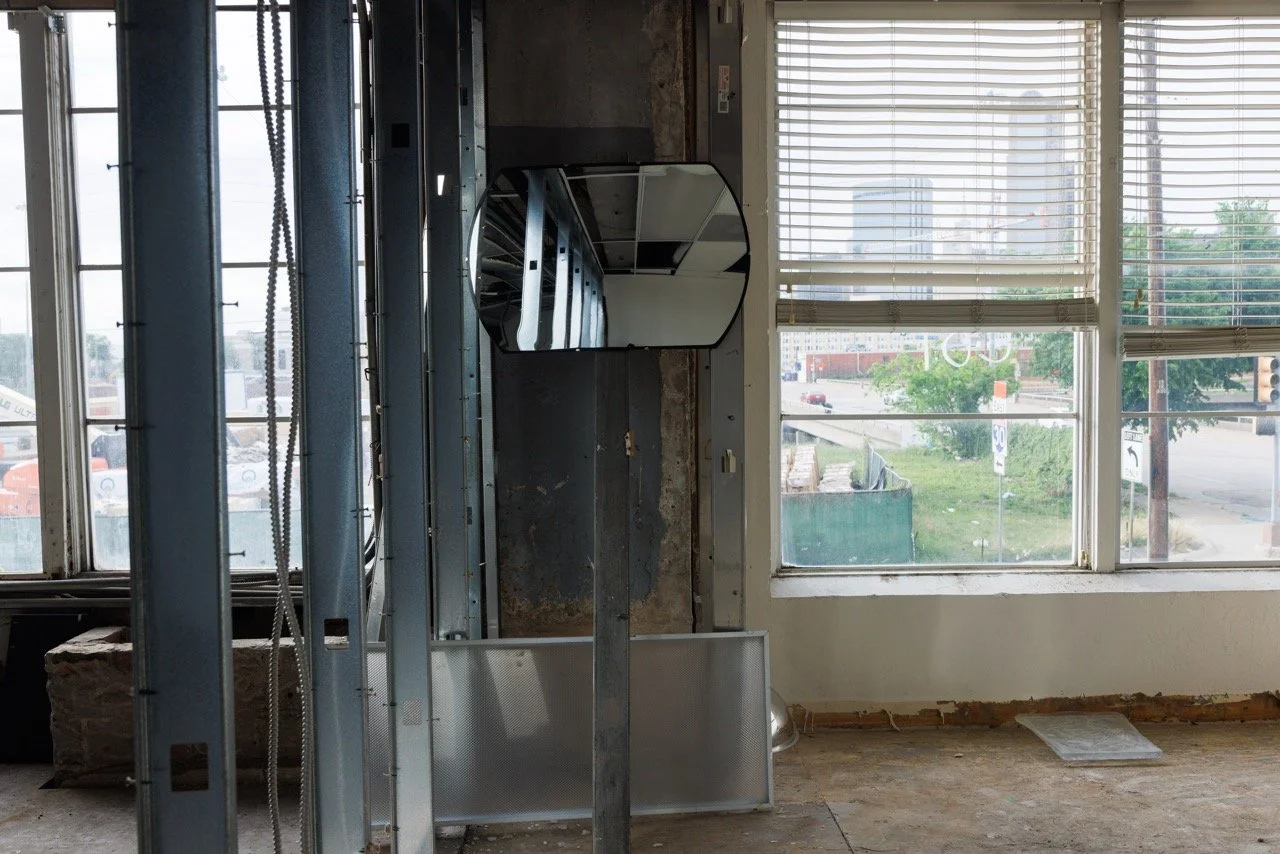
Detail of “Static Field,” photo by Evie Bishop
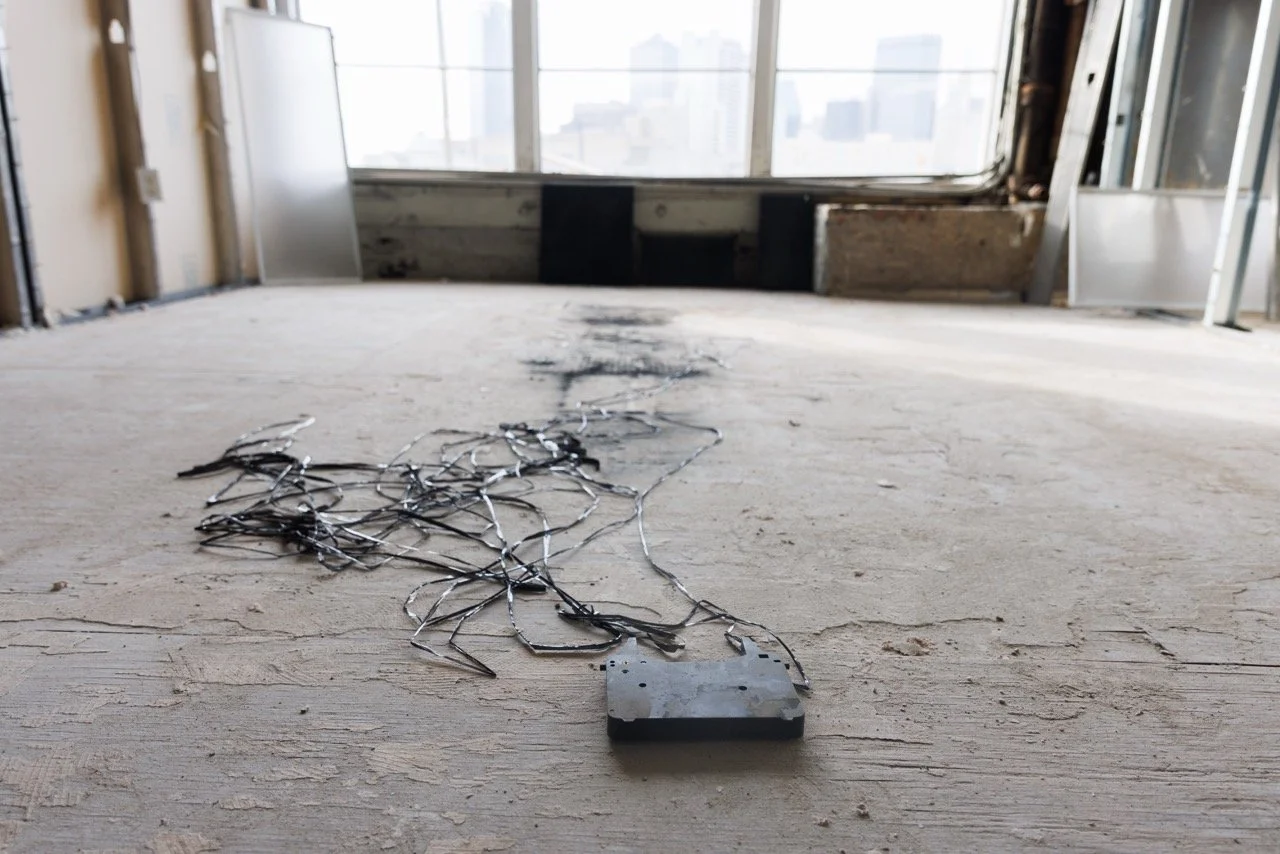
Detail of “Static Field” typewriter ribbon and carbon “prints”, photo by Evie Bishop
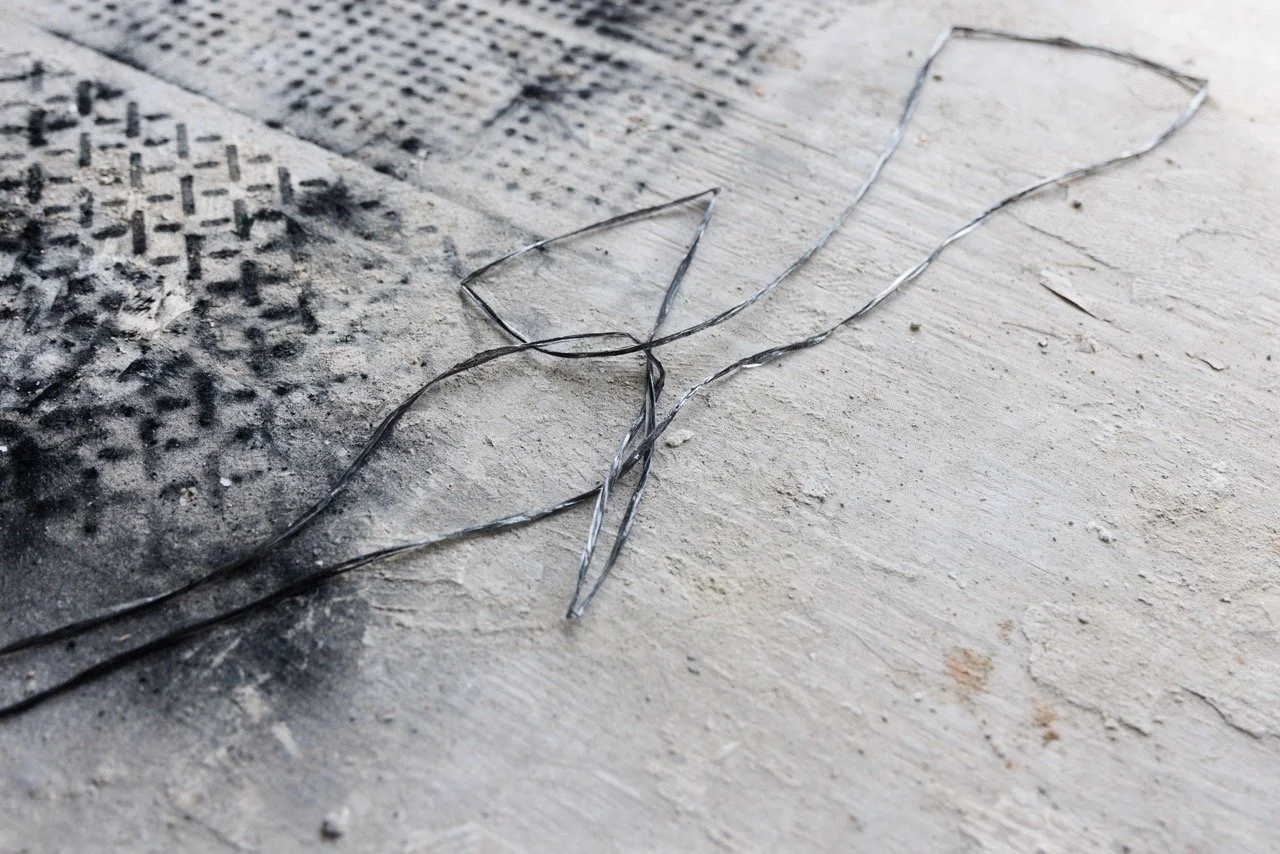
Detail of “Static Field” typewriter ribbon and carbon “prints”, photo by Evie Bishop
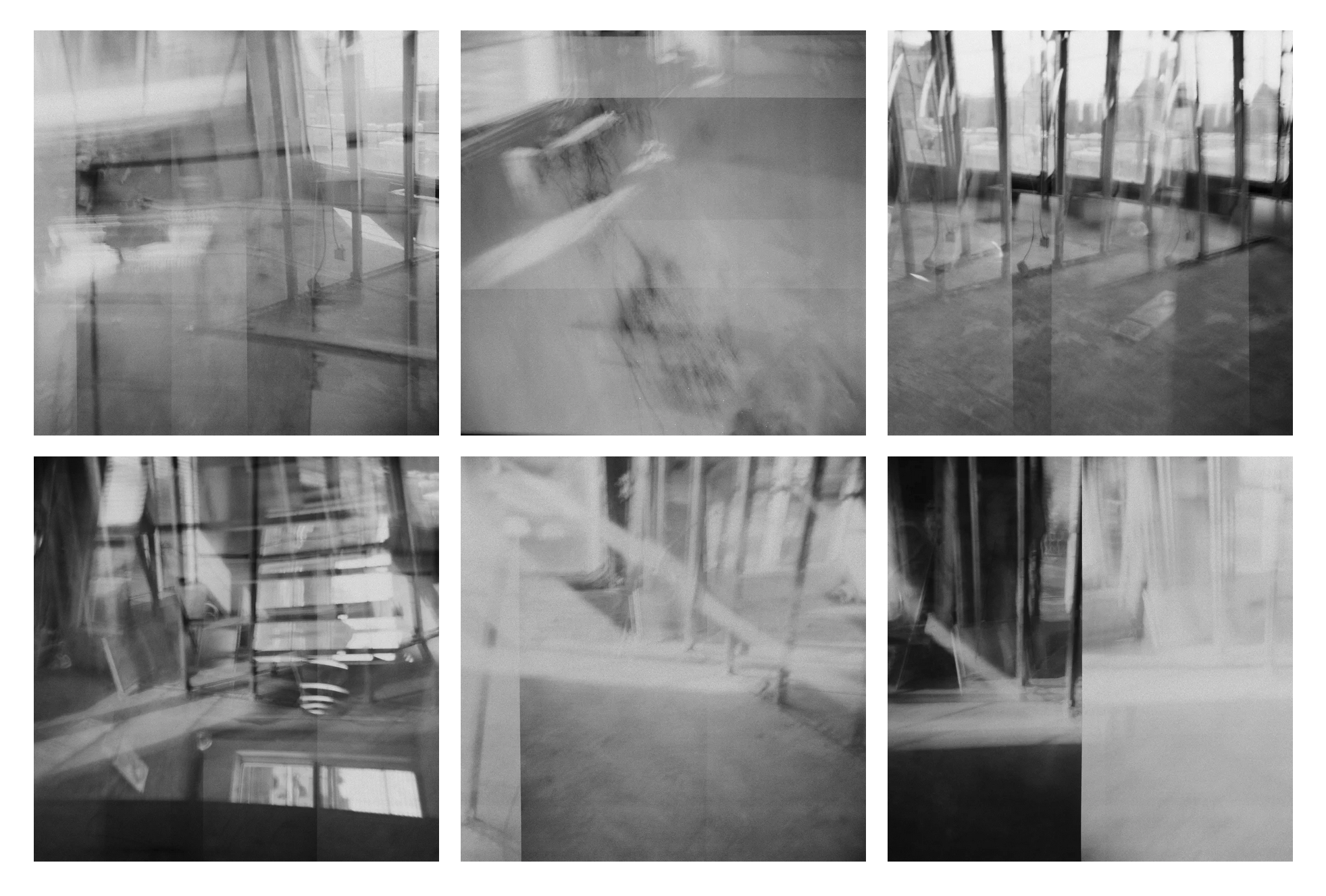
Made during the installation and exhibition of Static Field, these photographs use overlapping exposures and the imperfect mechanics of a Holga camera to transform the space into a layered field of reflections, fragments, and accumulated traces. Rather than documenting the installation directly, the images record shifting relationships between light, architecture, atmosphere, and duration.
The resulting photographs extend my ongoing interest in images that remain unstable—continually shaped by processes of translation, displacement, erosion, and change.